Eric asked: I know Scientology opposes the drugging of society, but I am unclear as to precisely what extent it stands in opposition to drug consumption, i.e. absolute opposition vs. nuanced opposition.
What, if anything, does Scientology have to say, for example, about "moderate" caffeine and/or alcohol consumption? Are Scientologists discouraged from drinking beer and caffeinated soda?
Hey Eric,
Great question.
The Church does its utmost to not interfere in people's lives. So there are no rules about what you can and can't do regarding drugs - other than the usual laws of the land.
It has been found that certain drugs affect Scientology Auditing, so there are rules about how long you have to wait after (for example) drinking a beer or taking a painkiller before you can get auditing.
The church policy about physical illness is that you should go to a competent practitioner in that field: e.g., an MD, a chiropractor, a nutritionist, etc. At that point it's up to the practitioner.
As to attitudes of Scientologists to drugs, there are some survey results here: Use Of Drugs/Alcohol.
The following data on attitudes to drugs is from my own experience and observations.
Illegal drugs: They are illegal, so we don't touch them.
Legal drugs that have been proven to be safe: if you need a drug because of a medical situation and it has been prescribed by a competent practitioner then you should take it. Ditto for over-the-counter stuff.
Scientologists are individuals. Most that I know are very careful about drugs and we have workable alternatives to them. For example, I'd say a Scientologist was less likely to take a painkiller for the pain from an injury than your average Joe, because we have alternative, very workable methods of handling pain (See Scientology Assists). But if you need a medical drug and it's the usual thing to take then you take it.
Here is an example: a friend of mine had a burst appendix. It was pretty severe and she needed a major operation to handle the peritonitis caused by it (she still has a 6 inch scar from this operation). After the operation she was put on Vicodin for the post-op pain - a powerful and potentially addictive painkiller. As soon as I could, I gave her a course of Scientology Assists and next day she didn't need the Vicodin anymore, she was able to go down to aspirin. After some more assists she didn't need any drugs at all.
Legal drugs that have been proven to be dangerous and to cause harm but are still on the market because the drug manufacturer makes billions from them: We are opposed to these. We don't take them. Examples of this sort of drug: Psychiatric Drug Side Effects Search Engine.
Other miscellaneous drugs such as alcohol, caffeine, tobacco, etc.: Some drugs can get in the way of Scientology Auditing. For example, you can't get auditing within 24 hours of drinking alcohol because it has been found that it will interfere with your spiritual progress. Same goes for some other drugs such as aspirin. So there is no restriction on you having a beer, just that you can't get auditing for 24 hours afterwards.
I've never seen anything regarding most other "minor" drugs such as caffeine or tobacco, it's personal choice.
My own personal preference is to stay away from any kind of drug as much as possible. If I have a physical problem then I'll first try something natural, if it doesn't work then I'll try something stronger, but I'll try to apply the Scientology principle of gradients. E.g., If I had a nasty systemic virus such as Chronic EBV, then maybe I'd start with dioxychlor, if it didn't handle it I'd move on to something stronger and more medical like doxycycline and if that didn't work then acyclovir (BTW: that's an actual example I know of). Of course, all this would be done under the guidance of a competent practitioner, the Church would not be involved in this sort of medical treatment in any way.
I hope that answers your question.
Showing posts with label Scientology Assists. Show all posts
Showing posts with label Scientology Assists. Show all posts
Wednesday, November 11, 2009


Saturday, February 07, 2009
Personal Integrity (Continued)
Beacon Schuler made a long comment on my post "Further comments on Personal Integrity". You'll find what he said in italics and my replies in plain text:
In discussing touch assists, you say the following: "both she and I could observe that the assist had worked because the pain in her hand was gone - which is the end product of an assist." You suggest that relief from pain is a positive indicator that the touch assist has worked. How is that not a medical claim?
The answer is here: Factors of Assists. among other things it says:
Also see this: Helping an Individual Heal Himself, which says:
The What Is Scientology website, whose words I obviously won't hold you personally to, states the following: "They can be done on a dull pain in the back, a constant earache, an infected boil, an upset stomach. In fact, the number of things this simple but powerful process can be applied to is unlimited!" Perhaps this statement only refers to attendant "spiritual trauma" but if it is the spiritual trauma itself that is being treated and not the injury, illness or infection, then surely the touch assist should only be discussed in those terms. Bringing a shopping list of ailments in at this point can only confuse the touch assist's purpose. As I say, these aren't your words, so I won't belabor the point.
It is part of the definition of an assist that it is a spiritual process. I think it would be pointless to keep adding, "and by that we mean spiritual" to every place that mentions what an assist can do. Also to omit examples of what an assist can be applied to would fail to communicate the full scope of where they can be used.
Further, I hold to my statement that one persons experiences are not enough to validate these sorts of falsifiable claims.
I gave you one example. I personally have given hundreds of assists, received many and I know many other people who have done the same. Assists work.
You cite the discovery of penicillin as being down to observation, but this is observation in a controlled framework designed to prove a hypothesis. Doing a touch assist on someone who is suffering from pain until that pain subsides is not such a framework. You'll never know what would have happened if you hadn't done the assist; and if you hadn't done the assist, you'd never know what would have happened if you had.
I'm not trying to prove to you whether assists work or not. If you want to conduct such experiments then feel free, but if someone comes to me injured and I can do something to alleviate the pain, then I'll do it.
I'm not trying to prove anything to you or anyone else. Once an individual has received or given a few assists the fact that they take the pain away is very obvious and the person will know for themselves whether they work or not.
Before the clinical trial was used, medicine was ruled by dubious authority. Doctors would train under other Doctors, learn from those Doctor's personal experiences. Differences of opinion arose, but there was no method for determining which treatments, if any, were appropriate. It wasn't really until Lind's study into scurvy that this began to change.
When we are talking about something that has potentially damaging side-effects like drugs then I think tons of trials (not paid for by the company marketing the drug) should be undertaken and all the results (not just the favorable ones) should be published.
The point, in general, is that one has to look beyond one's own beliefs and opinions and prejudices in order to make one's mind up about such things. The other important aspect about clinical trials is they can be repeated. Scientists can check out other people's findings for themselves. To me this is just as important a part of personal integrity - to get all the data in when making these decisions.
I agree. As long as all the data from clinical trials is made public, not just the favorable results. Without all the data (and that includes who is financing the trials and the doctors reporting the trials) you can't come to a correct conclusion.
That's why I also think that one ought to discuss, discuss and discuss again one's beliefs. It's mutually beneficial - you put your own convictions, and those of other people, to the test, and you've nothing to lose but the stuff you're better off without.
That sounds reasonable.
I'd like to make the point that Scientology is not a belief based religion. It is an observation based religion: here is data, use it, see if it works, make up your own mind. That is how you are expected to do things in Scientology. There are few beliefs to discuss.
The only beliefs in Scientology are given here: The Creed of the Church of Scientology.
If you want to discuss that then leave a comment.
In discussing touch assists, you say the following: "both she and I could observe that the assist had worked because the pain in her hand was gone - which is the end product of an assist." You suggest that relief from pain is a positive indicator that the touch assist has worked. How is that not a medical claim?
The answer is here: Factors of Assists. among other things it says:
"All Scientology processes address and handle a wide range of conditions affecting the spirit, the being himself." It also says, "Illnesses caused by recognizable bacteria and injury in accident are best treated by physical means. These fall distinctly into the field of medicine and are not the province of Scientology."
Also see this: Helping an Individual Heal Himself, which says:
"An assist in no way intrudes upon the role of medicine. Medical examination and diagnosis should be sought where needed, and where treatment is routinely successful, medical treatment should be obtained. As an assist can at times cover up an actual injury or broken bone, no chances should be taken, especially if the condition does not easily respond."
The What Is Scientology website, whose words I obviously won't hold you personally to, states the following: "They can be done on a dull pain in the back, a constant earache, an infected boil, an upset stomach. In fact, the number of things this simple but powerful process can be applied to is unlimited!" Perhaps this statement only refers to attendant "spiritual trauma" but if it is the spiritual trauma itself that is being treated and not the injury, illness or infection, then surely the touch assist should only be discussed in those terms. Bringing a shopping list of ailments in at this point can only confuse the touch assist's purpose. As I say, these aren't your words, so I won't belabor the point.
It is part of the definition of an assist that it is a spiritual process. I think it would be pointless to keep adding, "and by that we mean spiritual" to every place that mentions what an assist can do. Also to omit examples of what an assist can be applied to would fail to communicate the full scope of where they can be used.
Further, I hold to my statement that one persons experiences are not enough to validate these sorts of falsifiable claims.
I gave you one example. I personally have given hundreds of assists, received many and I know many other people who have done the same. Assists work.
You cite the discovery of penicillin as being down to observation, but this is observation in a controlled framework designed to prove a hypothesis. Doing a touch assist on someone who is suffering from pain until that pain subsides is not such a framework. You'll never know what would have happened if you hadn't done the assist; and if you hadn't done the assist, you'd never know what would have happened if you had.
I'm not trying to prove to you whether assists work or not. If you want to conduct such experiments then feel free, but if someone comes to me injured and I can do something to alleviate the pain, then I'll do it.
I'm not trying to prove anything to you or anyone else. Once an individual has received or given a few assists the fact that they take the pain away is very obvious and the person will know for themselves whether they work or not.
Before the clinical trial was used, medicine was ruled by dubious authority. Doctors would train under other Doctors, learn from those Doctor's personal experiences. Differences of opinion arose, but there was no method for determining which treatments, if any, were appropriate. It wasn't really until Lind's study into scurvy that this began to change.
When we are talking about something that has potentially damaging side-effects like drugs then I think tons of trials (not paid for by the company marketing the drug) should be undertaken and all the results (not just the favorable ones) should be published.
The point, in general, is that one has to look beyond one's own beliefs and opinions and prejudices in order to make one's mind up about such things. The other important aspect about clinical trials is they can be repeated. Scientists can check out other people's findings for themselves. To me this is just as important a part of personal integrity - to get all the data in when making these decisions.
I agree. As long as all the data from clinical trials is made public, not just the favorable results. Without all the data (and that includes who is financing the trials and the doctors reporting the trials) you can't come to a correct conclusion.
That's why I also think that one ought to discuss, discuss and discuss again one's beliefs. It's mutually beneficial - you put your own convictions, and those of other people, to the test, and you've nothing to lose but the stuff you're better off without.
That sounds reasonable.
I'd like to make the point that Scientology is not a belief based religion. It is an observation based religion: here is data, use it, see if it works, make up your own mind. That is how you are expected to do things in Scientology. There are few beliefs to discuss.
The only beliefs in Scientology are given here: The Creed of the Church of Scientology.
If you want to discuss that then leave a comment.
Friday, August 22, 2008
Scientology Assist helps get rid of brain tumor
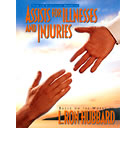
Two weeks before going in for surgery to have a brain tumor removed, the woman with the tumor and her husband attended a lecture on Scientology Assists. After the lecture they applied what they had learned and when it came time for the operation, the pre-op X-ray showed that the tumor had gone. An amazing success story!
Assists are not a substitute for medical treatment. The fact is, after any necessary medical treatment, the individual himself has an enormous capacity to influence the body and its well-being or lack of it. Assists help the individual to influence the body to recover.
Here is the full story of this remarkable success: Scientology Assists Get Rid Of Brain Tumor!!
Subscribe to:
Posts (Atom)